

Japan topographic maps
Click on a map to view its topography, its elevation and its terrain.

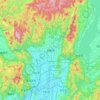
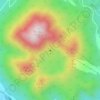
Mt. Sanbe
Mount Sanbe, also known as Sanbesan, is an active stratovolcano in Ōda, Shimane Prefecture. The highest peak, Osanbe, has an elevation of 1,126 m (3,694 ft). At the center of the volcano is a caldera 1 km (0.62 mi) across. The volcano's composition is mainly dacite and andesite.
Average elevation: 732 m
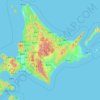
Hokkaido
As Japan's coldest region, Hokkaidō has relatively cool summers and icy/snowy winters. Most of the island falls in the humid continental climate zone with Köppen climate classification Dfb (hemiboreal) in most areas but Dfa (hot summer humid continental) in some inland lowlands. The average August…
Average elevation: 98 m

Totsukawa
Sasa-no-taki [ja] (笹の滝) is a waterfall located on the outskirts of Totsukawa, and is ranked by Kodansha as one of the 100 Best Waterfalls in Japan. It is about 32 m (105 ft) tall and 13 km (8.1 mi) away from Takikawa gorge, and has an altitude of 500 m (1,600 ft) with multiple hiking trails leading up to…
Average elevation: 673 m
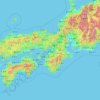


Rishiri Island
Rishiri derives its name from the Ainu language, and means "high island", or "island with a high peak", a reference to the altitude of Mount Rishiri above sea level.
Average elevation: 153 m


Nagano
Nagano (長野市, Nagano-shi, pronounced [nagaꜜno ɕi]) is the capital and largest city of Nagano Prefecture, located in the Nagano Basin (Zenkoji Daira) in the central Chūbu region of Japan. Nagano is categorized as a core city of Japan. Nagano City is the highest prefectural capital in Japan, with an…
Average elevation: 828 m


Maebashi
Maebashi is located at the foot of Mount Akagi in the northeast corner of the Kantō Plain. It is also surrounded by Mount Haruna and Mount Myōgi. Two rivers run through the city: the Tone River, Japan's second-longest, and the Hirose River. Although it is located inland more than 100 kilometers away from the…
Average elevation: 340 m


Mount Hotaka
Japan > Tone County > Kawaba
Mount Hotaka (武尊山 Hotakayama, 上州武尊山 Joshu Hotakayama) is a stratovolcano with its highest peak at the altitude of 2,158m. It is located near Minakami-machi, Kawaba Village, and Katashina Village in the Gunma Prefecture. In order to distinguish it from Mount Hotakadake in the Northern Alps, it…
Average elevation: 1,795 m


Ichinomiya
Facing the Pacific Ocean coast of central Bōsō Peninsula, the eastern part of the town includes a section of the popular Kujūkuri Beach, whereas the western part is in the Bōsō Hill Range with long and deep valleys extend into the forest, and there are scattered ponds for agricultural water.The Ichinomiya…
Average elevation: 15 m

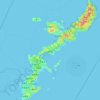
Okinawa Island
The Motobu Peninsula in the north has limestone layers and karst development. In the center and south is mainly a Ryukyu limestone layer and mudstone. The topography is flat, there are few hills over 100 m (328 ft) with very few rivers. The subtropical rains accelerate erosion so there are many drainages and…
Average elevation: 14 m


Mount Miyanoura
Japan > Kumage County > Yakushima
Mount Miyanoura (宮之浦岳, Miyanoura-dake) is a mountain in central Yakushima in Kagoshima Prefecture. At an altitude of 1,936 m (6,352 ft), it is the highest peak of Yakushima and also the highest peak of the Kyushu region. It is one of the 100 Famous Japanese Mountains.
Average elevation: 1,628 m


Takino Suzuran Hillside Park
Takino Suzuran Hillside National Government Park (国営滝野すずらん丘陵公園, Kokuei Takino Suzuran Kyūryō Kōen) is a Japanese national government park located in Sapporo, Hokkaido. It is the only national government park in the northern island of Hokkaido. The park area spreads over 395.7m…
Average elevation: 263 m








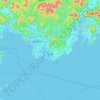
Ube
Ube is part of ancient Nagato Province. The Kotozaki Hachiman-gu shrine dates from the Heian period and the local Koto clan, a branch of the Mononobe clan dominated the area into the Kamakura period. The area became part of the holdings of the Ōuchi clan in the Muromachi period and subsequently part of…
Average elevation: 38 m


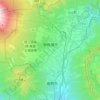
Gotemba
Gotemba is located in far eastern Shizuoka Prefecture at an altitude of 250–600 metres (820–1,970 ft). Mount Fuji is located to the west, and Mount Hakone to the east, with the Tanzawa Mountains to the north and Mount Ashitaka to the south. The area is noted for its numerous golf courses, with the Mitsui…
Average elevation: 650 m


Kyushu Region
The total area is 36,782.37 km2 (14,201.75 sq mi) which makes it the 37th largest island in the world. It is slightly larger than Taiwan's total area of 35,808 km2 (13,826 sq mi). The highest elevation is 1791 meters (5876 feet) on Mount Kujū.
Average elevation: 23 m


Miyoshi
Miyoshi is located almost in the middle of the Chugoku region, with the Chugoku Mountains to the north and a flat agricultural area to the south. Together with the neighboring city of Shōbara, it forms the northern part of the prefecture called the "Bihoku region". Because the tributaries of the Enokawa River…
Average elevation: 386 m


Akishima
Akishima is located on the left bank of the Tama River, about 35 kilometers west of central Tokyo. The Tamagawa Aqueduct flows in the northern part of the city. The city area generally slopes gently from northwest to southeast toward the Tama River, which flows to the south of the city. The altitude of the…
Average elevation: 112 m


Tsumagoi
Tsumagoi has a humid continental climate (Köppen Dfb) characterized by warm summers and cold winters with heavy snowfall, due to the high elevation. Winters are cold, with a January 24-hour average temperature of −4.6 °C (23.7 °F), while summers are warm and wet, with a July 24-hour average temperature of…
Average elevation: 1,309 m


Isumi
Isumi is located on the east coast of southern Chiba Prefecture, on the Bōsō Peninsula. It is bordered by the Pacific Ocean to the east, and enjoys a temperate maritime climate, with short, cool winters and hot, humid summers due to the effects of the Kuroshio Current offshore. The area is noted for its…
Average elevation: 30 m
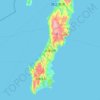
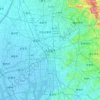


Mount Yari
Two triangulation points were established at the summit. A milepost stone is fixed to the ground. As a reference point for the Geographical Survey Institute of Japan, it is of little importance and even on topographic maps, the summit of Yari-ga-take appears merely as an elevation point.
Average elevation: 2,606 m


