Topographic maps
Click on a map to view its topography, its elevation and its terrain.
Singapore
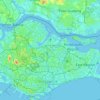
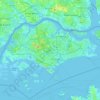
The Central Region of Singapore, encompassing approximately 132.7 square kilometers (51.2 square miles), features a diverse topography characterized by both hilly terrains and flat coastal areas. Dominating the landscape is Bukit Timah Hill, the nation's highest natural point at 164 meters (538 feet), composed…
Average elevation: 11 m




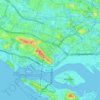
Singapore
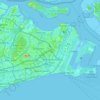
Average elevation: 14 m







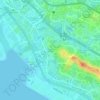
Fort Canning Park
The hill has a long history intertwined with that of the country due to its location as the highest elevation within walking distance to the city's civic district, within the Downtown Core. It is also a popular location for exhibitions, concerts, and outdoor recreation.
Average elevation: 19 m

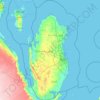
Qatar
Average elevation: 20 m
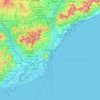
Mumbai
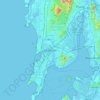
The majority of the city lies just above the mean sea level, with elevations ranging from 10 to 15 m (33 to 49 ft), and an average elevation of 14 m (46 ft). Northern Mumbai consists of hilly terrain, with the highest point in the city at 450 m (1,480 ft) in the Powai–Kanheri range. The coastline is indented…
Average elevation: 13 m


Indonesia
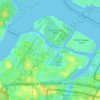
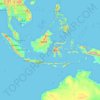
Indonesia's topography is as varied as its expansive archipelago, marked by rugged mountain ranges, volcanic activity, and vast lowland plains. The majority of its major islands are mountainous, with some of the highest peaks rising above 16,000 feet (4,877 meters), such as Puncak Jaya in Papua. These…
Average elevation: 81 m









Yunnan
Yunnan is situated in a mountainous area, with high elevations in the Northwest and low elevations in the Southeast. Most of the population lives in the eastern part of the province. In the west, the altitude can vary from the mountain peaks to river valleys as much as 3,000 m (9,800 ft). Yunnan is rich in…
Average elevation: 20 m