

Make a donation
Peru topographic maps
Click on a map to view its topography, its elevation and its terrain.
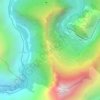
Machu Picchu
Peru > Cusco > Machupicchu > San Miguel
Animals are also suspected to have immigrated to Machu Picchu as there were several bones found that were not native to the area. Most animal bones found were from llamas and alpacas. These animals naturally live at altitudes of 4,000 metres (13,000 ft) rather than the 2,400 metres (7,900 ft) elevation of…
Average elevation: 2,227 m
Make a donation


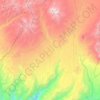
Chinchaypujio
The district of Chinchaypujio has a 2,000-metre (6,600 ft) altitude spread from south to north; hence, the district is home to multiple climate zones. In the south, the Apurímac River runs at 2,200-metre (7,200 ft) elevation where Banana Isla Maleño and other tropical fruit can be grown, in the north, the…
Average elevation: 3,604 m


Make a donation

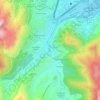
Sacred Valley of the Incas
The valley, running generally west to east, is understood to include everything along the Urubamba River between the town and Inca ruins at Písac and Machu Picchu, 100 kilometres (62 mi) distant. The Sacred Valley has elevations above sea level along the river ranging from 3,000 metres (9,800 ft) at Pisac to…
Average elevation: 3,808 m

Make a donation


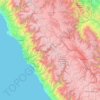
Manu National Park
Manu National Park covers an area of 1,716,295.22 hectares (17,162.95 km2) which comprises mountainous areas (traversed by creeks and valleys) with elevations close to 4000 m above sea level and a portion of the Amazon Basin plains.
Average elevation: 1,010 m
Make a donation



Make a donation



Make a donation


Cordillera Huayhuash
The area preserves high elevation Andean grasslands and patches of forest. Some of the native tree species present in the area are the Andean alder and trees of the genus Polylepis.
Average elevation: 4,826 m

Make a donation

Amazonas
The Amazonian Andes are constituted by the oriental flank of the Andes, covered originally by a dense Amazon vegetation. It spread from the cordillera spurs until reaching surprising altitudes where the forests have not been felled, in certain cases exceeding the 3 500 m.
Average elevation: 1,119 m
Make a donation



Make a donation
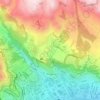
Sacsayhuamán
Peru > Cusco > Cuzco > Mollococha
Sacsayhuamán (/ˈsæksaɪˌwʌmən/ SACK-sy-wuh-mən; Spanish pronunciation: [saksajwaˈman]) or Saksaywaman (from Quechua Saksay waman pukara, pronounced [ˈsaksaj ˈwaman], lit. 'fortress of the royal falcon or hawk') is a citadel on the northern outskirts of the city of Cusco, Peru, the historic capital…
Average elevation: 3,578 m
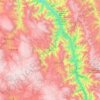

Cusco
The plain of Anta contains some of the best communal cultivated lands of the Department of Cusco. It is located about 3,000 metres (9,800 ft) above sea level and is used to cultivate mainly high altitude crops such as potatoes, tarwi (edible lupin), barley and quinoa.
Average elevation: 2,719 m
Make a donation
Lake Titicaca
Lake Titicaca has a surface elevation of 3,812 m (12,507 ft). The "highest navigable lake" claim is generally considered to refer to commercial craft. Numerous smaller bodies of water around the world are at higher elevations. For many years, the largest vessel afloat on the lake was the 2,200-ton (2,425 U.S.…
Average elevation: 3,870 m
Nevado Mismi
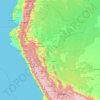
The Upper Amazon expedition (The Flying Expedition) included an Eastern European multi-axled articulated Land Rover for use on land, a float plane Papagaiu, for air support and reconnaissance, and the Peruvian Air Force offered a high elevation helicopter to reach the upper levels of the Chila mountain range…
Average elevation: 5,273 m
Make a donation

Make a donation


Make a donation
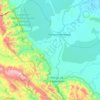

Rímac River
The Rímac River begins its journey on the western slope of the Andes mountain range at an altitude of approximately 5,508 mamsl in the Nevado Paca, touring the provinces of Lima and Huarochirí, both located in the department of Lima. Among the most important tributaries of the Rímac are the Santa Eulalia…
Average elevation: 2,779 m
Make a donation

Make a donation


Laguna Palcacocha
Peru > Ancash > Independencia
Palcacocha is located at 9°23′49″S 77°22′47″W / 9.39694°S 77.37972°W / -9.39694; -77.37972 in the Ancash Region in Cordillera Blanca at an elevation of 4,566 m, just below the summits of Palcaraju (6,274 m) and Pucaranra (6,156 m). The lake is one of several lakes supplying the town Huaraz…
Average elevation: 4,857 m

Make a donation
Make a donation

Make a donation

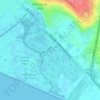
Los Pantanos de Villa Wildlife Refuge
Pantanos de Villa Wildlife Refuge consists of a series of brackish water lagoons and marshes. These wetlands are formed by the filtration and discharge of water from the Ate-Surco-Chorrillos irrigation canal (which branches off from the Rimac River) and other underground canals. Elevational range inside the…
Average elevation: 11 m
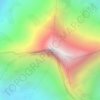
Nevado Salkantay
Salcantay, Salkantay or Sallqantay (in Quechua) is the highest peak in the Vilcabamba mountain range, part of the Peruvian Andes. It is located in the Cusco Region, about 60 km (40 mi) west-northwest of the city of Cusco. It is the 38th-highest peak in the Andes and the twelfth-highest in Peru. However, as a…
Average elevation: 5,266 m
Make a donation
Make a donation


Make a donation


Make a donation

Make a donation

Make a donation
Make a donation